Technologies
The chemical proteomics technologies behind better drug discovery decisions

Every drug discovery program faces different challenges.
Understanding target engagement and selectivity within a specific enzyme class provides a more in-depth view than broad-spectrum proteomics, while avoiding the narrow focus of a single-target approach. Omivera combines small-molecule probes with mass spectrometry to generate insights across an entire enzyme class, supporting better-informed drug discovery decisions.
Which chemical proteomics technology is right for your programme?
Different drug discovery questions require different profiling strategies. Omivera helps you select the most appropriate technology based on your target class, compound modality, desired readout and biological model.
CellEKT
Quantify kinase target engagement and selectivity
Profile kinase inhibitors across biologically relevant systems to support compound selection and optimisation.
- Single-dose or dose-response profiling
- Cell and tissue lysates
- Living cells
- In vivo models
Activity-Based Protein Profiling
Measure functional enzymatic activity
Use ABPP to profile serine hydrolase inhibitors or investigate host-cell protein impurities.
- Proteomics-based readouts
- Gel-based assays
- Cell and tissue lysates
- Living cells
Tailored Chemical Proteomics
Build the right approach for your target
Develop a customised chemical proteomics strategy when established profiling methods do not fit your compound or target.
- Covalent inhibitor profiling
- Custom probe development
- Target engagement assay development
- Fit-for-purpose experimental design
Every Omivera technology is built on the same principles.

Endogenous proteins
Measure proteins in their native biological environment.

Biologically relevant systems
Generate data in living cells and complex biological models.
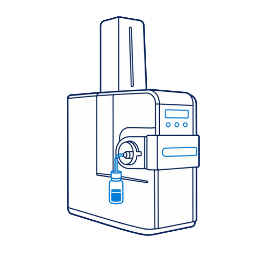
Mass spectrometry
Deep coverage across enzyme families with high sensitivity for quantitative analysis.

Cross-model profiling
Compare target engagement and activity across biological systems.
Actionable insights
Support confident compound prioritization
Our workflow
Every project starts with a scientific question. We work with you to define the objective, select the most appropriate chemical proteomics approach, and generate the data needed to support your next development decision.
1. The Question
Reach out to discuss your target engagement and/or selectivity challenge. We assess scientific feasibility to profile your compound, the biological model and f which chemical proteomics approach will deliver the right answers.
2. Kick-Off
Once scope, biological model, and deliverables are confirmed, the project begins. You send us your compound. we handle the rest.
3. The Experiment
The experiment runs in your chosen biological model with regular status updates throughout.
- CellEKT/ABPP: data within 8 weeks.
- Tailored approach: timeline depends on project scope and complexity.
4. Data
You receive an extensive report containing the target engagement data, together with the raw MS data, so you have full traceability of the results. (link to example dataset)
5. Debrief
We review the findings together and discuss their implications for your compound's target engagement and selectivity profile, helping you weigh the best next steps for your program.
6. Actionable Insights
The chemical proteomics data provides the insights to make the most confident, data-driven decision for your next step in the drug discovery process.
Omivera is led by founders with expertise in chemical proteomics, computational biology.