
Enabling better drug discovery decisions through chemical proteomics.
Generate quantitative target engagement and selectivity data to prioritize the right candidate with confidence.

Confident decisions require better evidence.
Drug discovery depends on understanding how compounds interact with their intended and unintended targets. Omivera generates quantitative chemical proteomics data to answer the critical questions needed to prioritize compounds with confidence.
Key questions before advancing your compound:
- Is my compound engaging its intended target?
- How selective is it in biologically relevant systems?
- How strongly is each target engaged?
- Is target engagement consistent across disease-relevant models?
Why chemical proteomics?

Native biological systems
Measure target engagement directly in living cells and other native biological systems rather than relying on simplified biochemical assays.

Endogenous protein profiling
Profile target engagement and selectivity across hundreds of endogenous proteins simultaneously, revealing both intended and unexpected interactions.
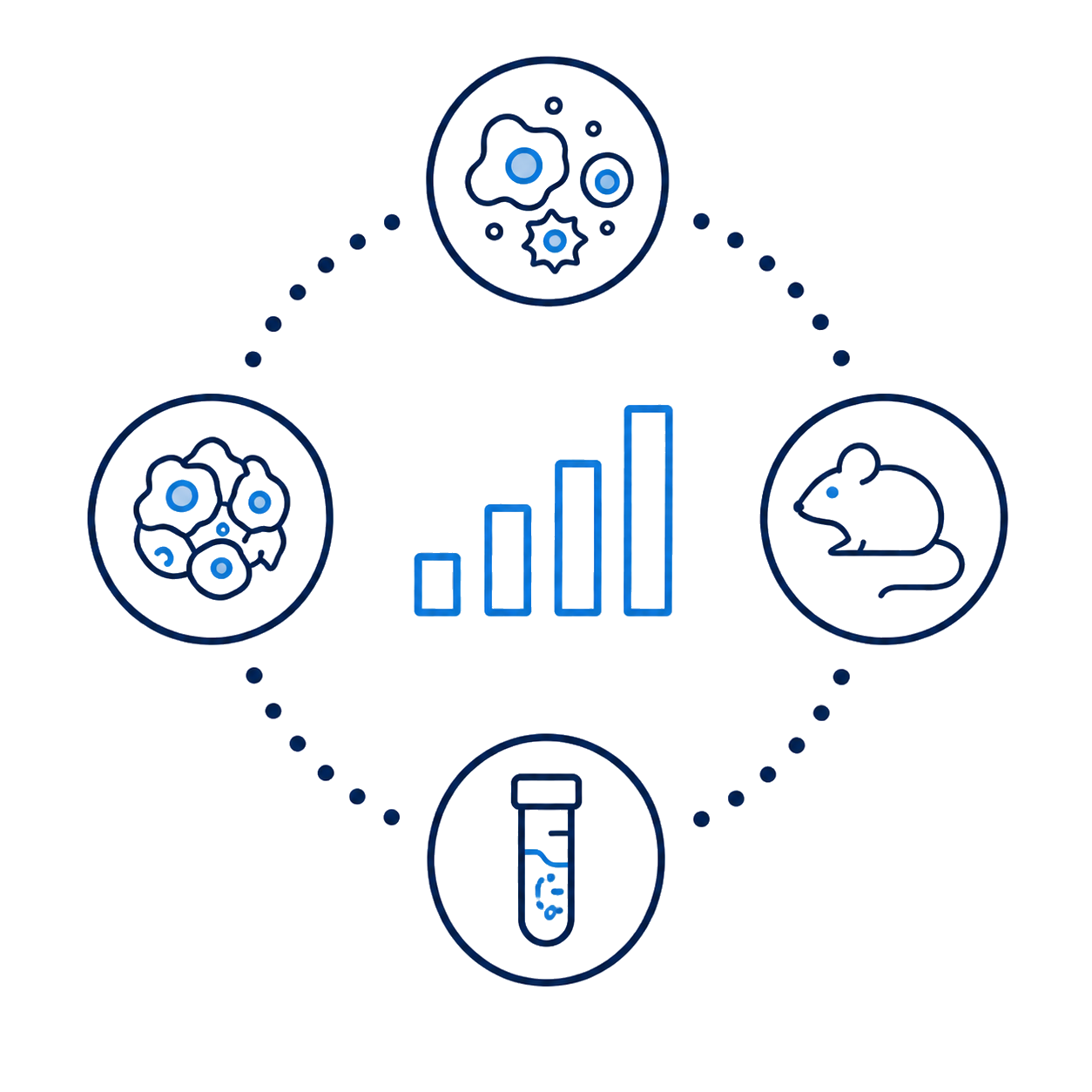
Cross-model profiling
Apply the same quantitative chemical proteomics workflows across cell lines, in vivo models, and PBMCs to directly compare target engagement as compounds progress through drug discovery.
Where you measure matters just as much as what you measure.
Whether you’re developing kinase inhibitors, serine hydrolase inhibitors or covalent drugs, we’d be happy to discuss the most appropriate chemical proteomics strategy.
Kinase Inhibitor Profiling – CellEKT
Quantitatively profile target engagement and selectivity across upt to 90% of endogenous kinases in biologically native systems.
Serine Hydrolase Inhibitor & Activity-Based Protein Profiling
Measure target engagement and selectivity of serine hydrolase inhibitors by using proteomics- and gel-based activity-based protein profiling (ABPP).
Covalent inhibitor profiling
Profile covalent inhibitors using residue specific probes or tailored probes, enabling measurement of target engagement across endogenous proteins.
Ensure every development decision is guided by biology that actually matters.
Joel Rüegger, CEO
Chemical Proteomics in Drug Discovery: Better Target-Engagement Decisions
Learn how chemical proteomics measures cellular target engagement and selectivity to support candidate prioritisation during drug discovery.
Target Engagement Profiling
Target Engagement Profiling helps drug discovery teams understand whether a compound engages its intended targets in a relevant cellular context. This supports more confident candidate prioritization before costly downstream studies.

CellEKT Reaches 100,000th Cell Processing Run
The milestone highlights growing adoption of automated workflows as cell therapy developers seek greater consistency and scalability.